
You’re weighing whole-home water treatment options to protect plumbing, appliances, and family health in Las Vegas’s hard-water conditions. Compare system types by what they remove, installation needs, ongoing costs, and how they fit into your home’s water pressure and space.
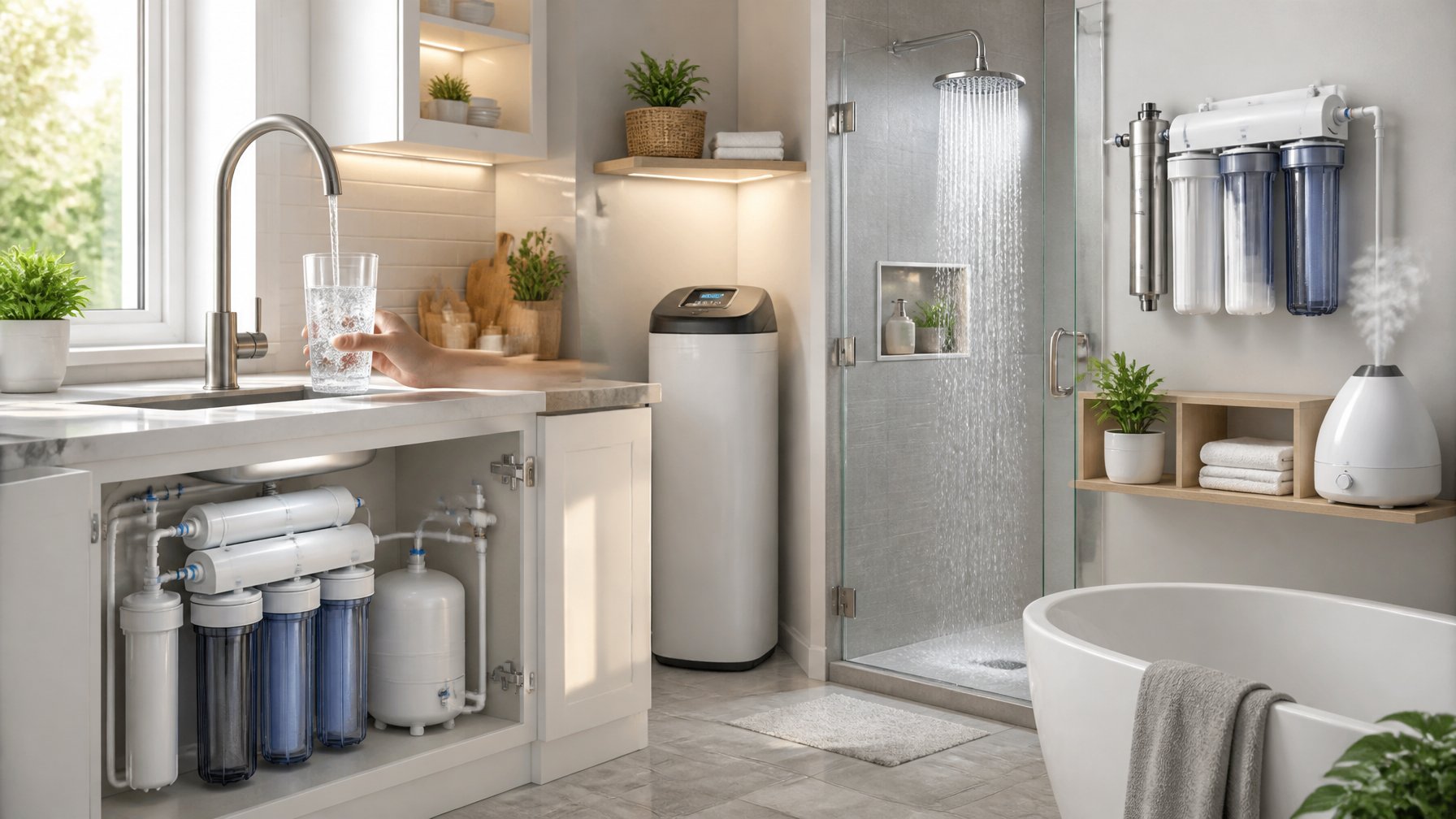
This article walks through common whole-home approaches so you can spot the tradeoffs and ask the right questions of installers. It helps you think about performance, maintenance, and cost so you pick the option that matches your priorities and house setup.
1) Whole-house reverse osmosis system (e.g., APEC RO-90)
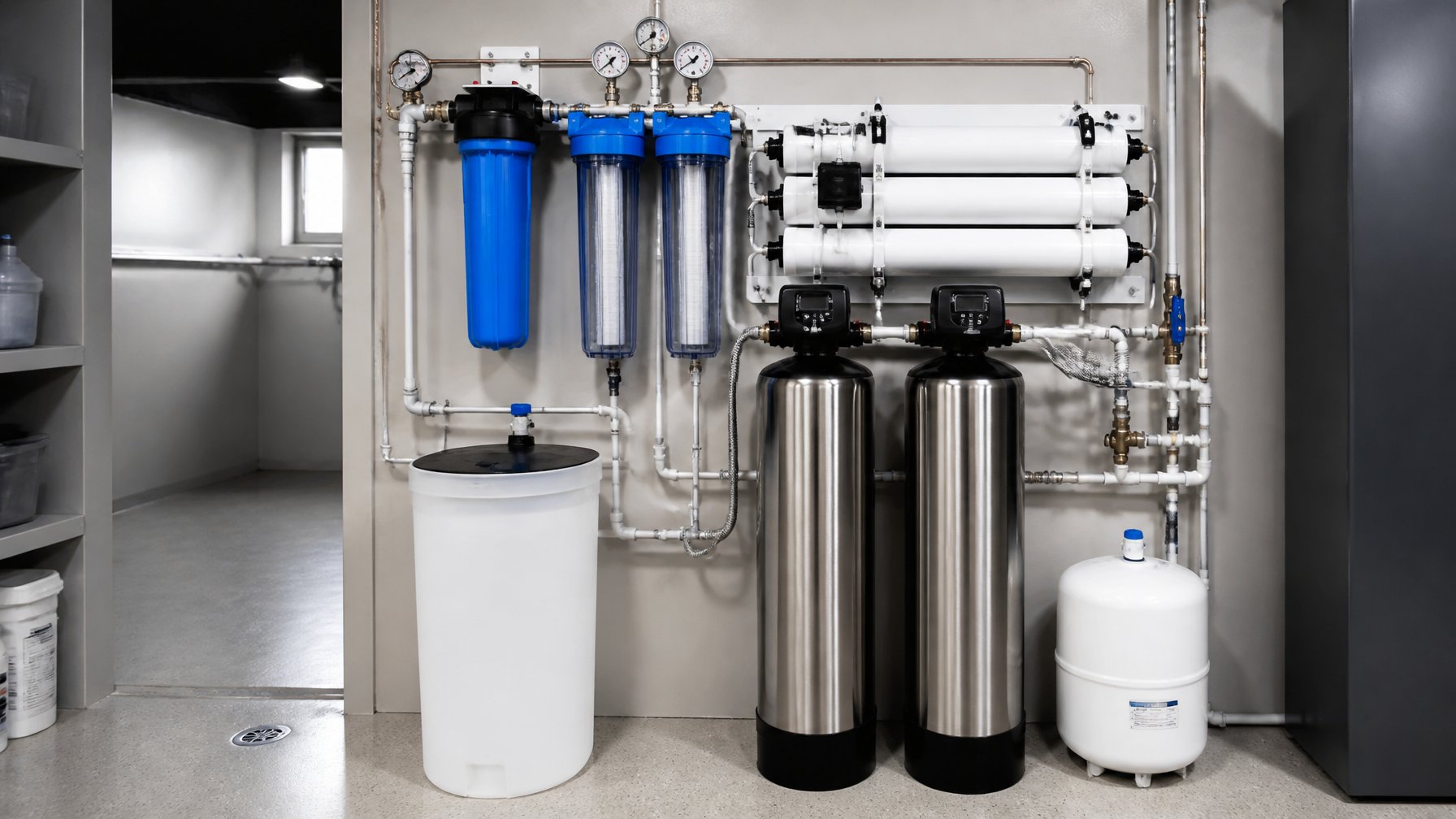
A whole-house reverse osmosis (RO) system filters water at the main line for very high purity. Compare flow rate and recovery rate: RO lowers minerals and contaminants but can reduce water pressure and waste more water.
Ask about pre- and post-filters, membrane lifespan, and maintenance needs. Find out how often filters change, the cost of replacement parts, and if a storage tank or booster pump is required for adequate flow.
Weigh upfront cost and operating costs against the level of purification needed. For many homeowners, point-of-use RO at the kitchen sink is cheaper; whole-house RO suits those needing treated water everywhere.
See related services on the homepage for whole-home filtration options.
2) Activated carbon whole-home filter (e.g., Aquasana Rhino EQ-1000)
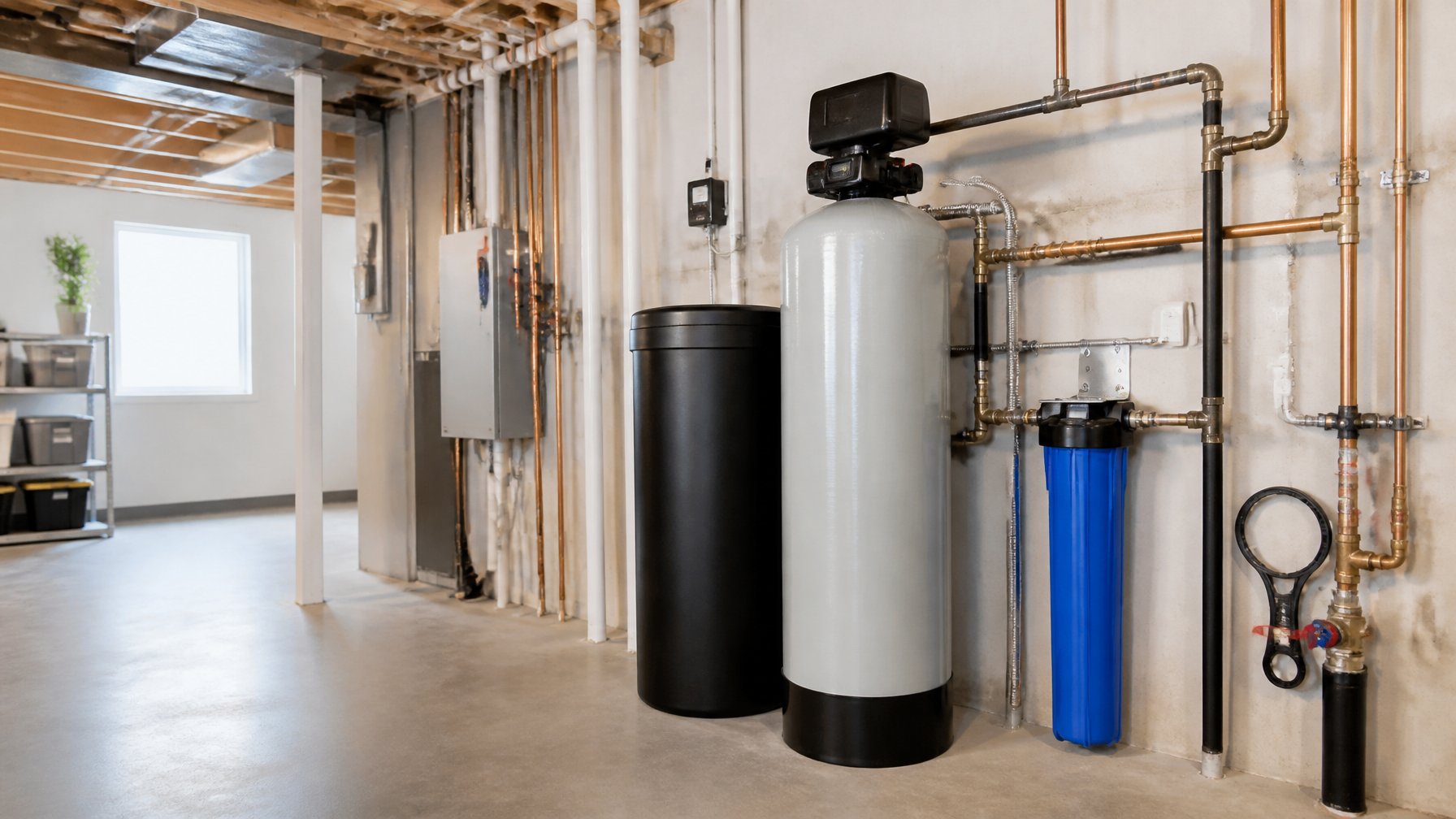
Activated carbon filters remove chlorine, bad tastes, and odors well. Homeowners should compare carbon type, contact time, and flow rate to ensure enough filtration without pressure loss.
Ask about filter lifespan, replacement cost, and whether sediment pre-filters are included. They should check system size for their household water use and look for NSF testing for targeted contaminants.
Consider tradeoffs: carbon excels at improving taste and smell but won’t remove hard water minerals or most dissolved metals unless paired with other media. They might pair it with a softener or reverse osmosis for drinking water points.
See whole-home water treatment options for matching systems and installers.
3) Salt-free water conditioner (e.g., Template Assisted Crystallization systems like Pelican NaturSoft)
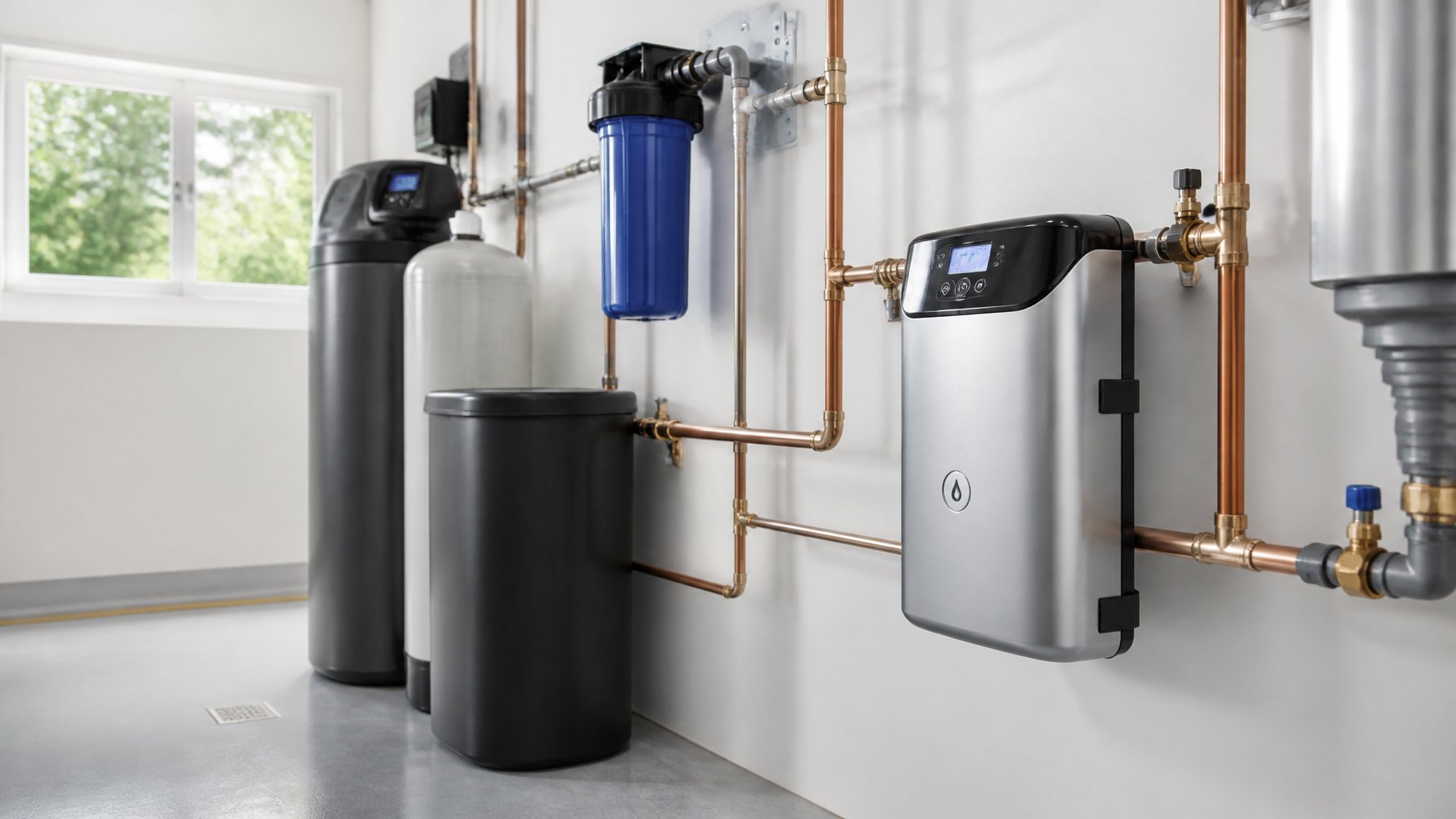
A salt-free conditioner reduces scale by turning dissolved minerals into tiny crystals. Homeowners should compare effectiveness claims, flow rate limits, and any required maintenance.
Ask whether the system needs periodic cartridge replacement and how often. Check if it handles the home’s hardness level and peak flow for showers and appliances.
Tradeoffs include no salt discharge or added sodium, but less effectiveness if hardness is very high. Also compare warranty length and certification.
Consider installation space and whether plumbers can mount it alongside a sediment filter. For more options, see the homepage.
4) Water softener with metered control (e.g., Fleck 5600SXT)
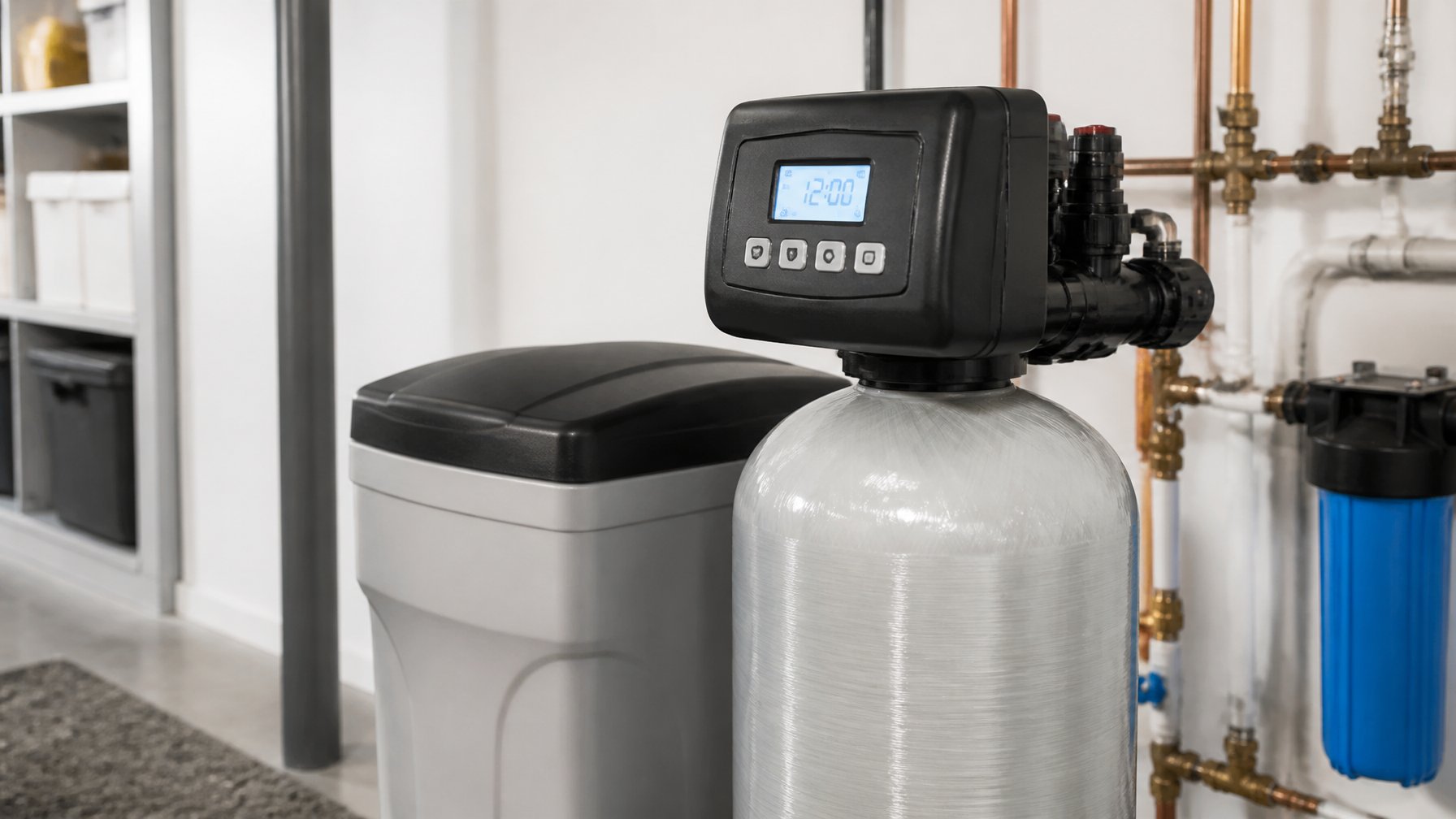
A metered softener regenerates based on water use, not a fixed schedule. Homeowners should compare how the meter tracks gallons and how often it triggers regeneration to avoid salt waste or hard water slipping through.
Ask about valve reliability, replacement parts, and the ease of programming the controller. Digital displays like the 5600SXT make settings clear, but check if the unit warns for low salt or service needs.
Weigh salt and water savings against initial cost and complexity. A metered system can save salt and water vs. timed systems, yet it may need occasional calibration and more attentive maintenance.
See the homepage for more system comparisons and installation tips. All images should show realistic home-improvement photos of basements, utility closets, or installed softener tanks.
5) UV disinfection whole-house system (e.g., Viqua D4)
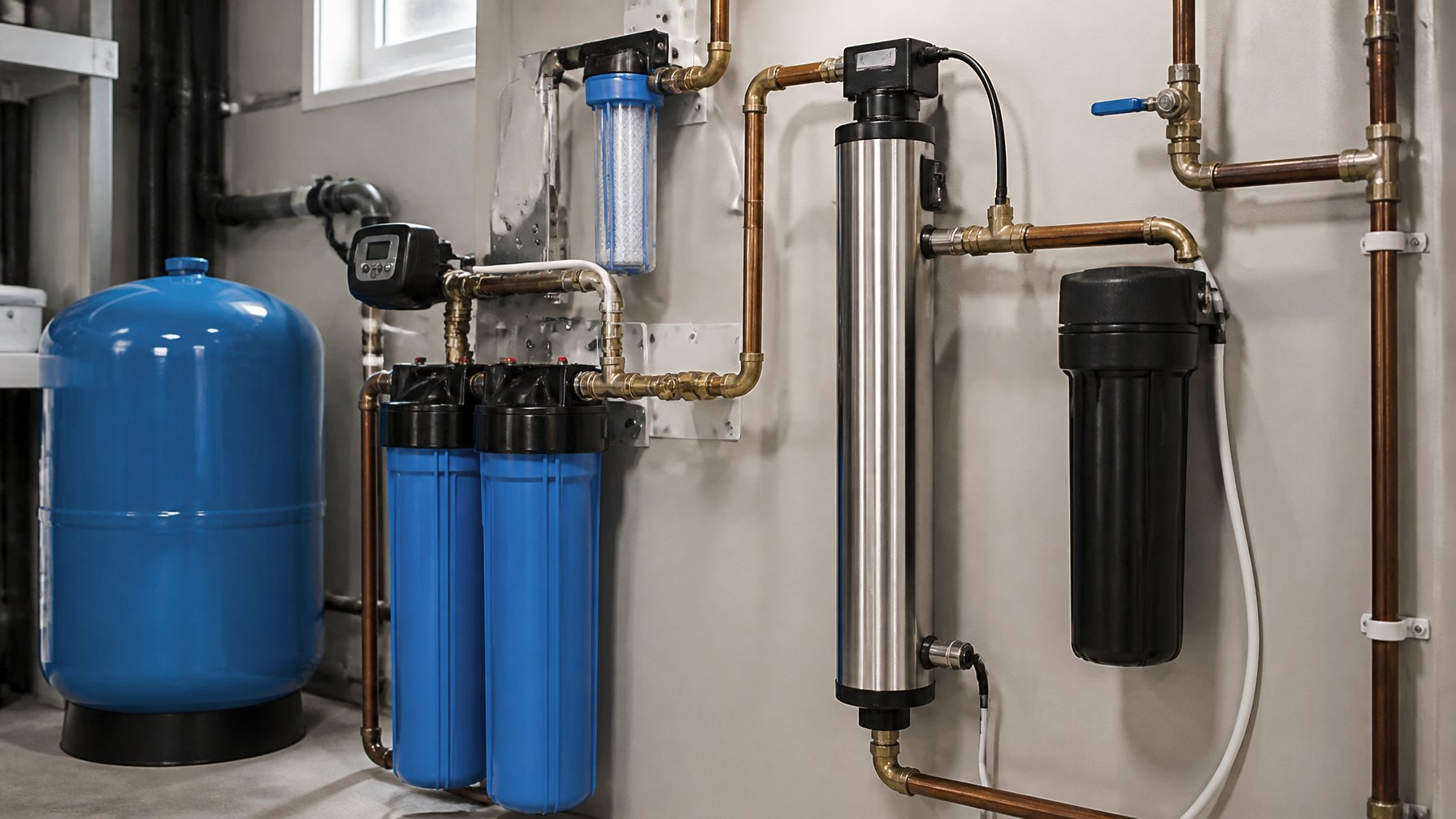
A UV whole-house system uses ultraviolet light to inactivate bacteria, viruses, and protozoa without chemicals. Homeowners should compare lamp life, flow rate, and required pre-filtration to make sure the unit matches well water or municipal concerns.
Ask about replacement lamp cost, quartz sleeve cleaning, and whether the unit has a fail-safe shutoff for low UV intensity. Tradeoffs include low ongoing chemical cost versus the need for electricity and routine maintenance.
Confirm the system’s certified disinfection dose and compatible flow rates for the home’s peak demand. They can read more on whole-home treatment options at the homepage.
6) Sediment pre-filter housing with 5-micron cartridge (e.g., Pentair Big Blue)
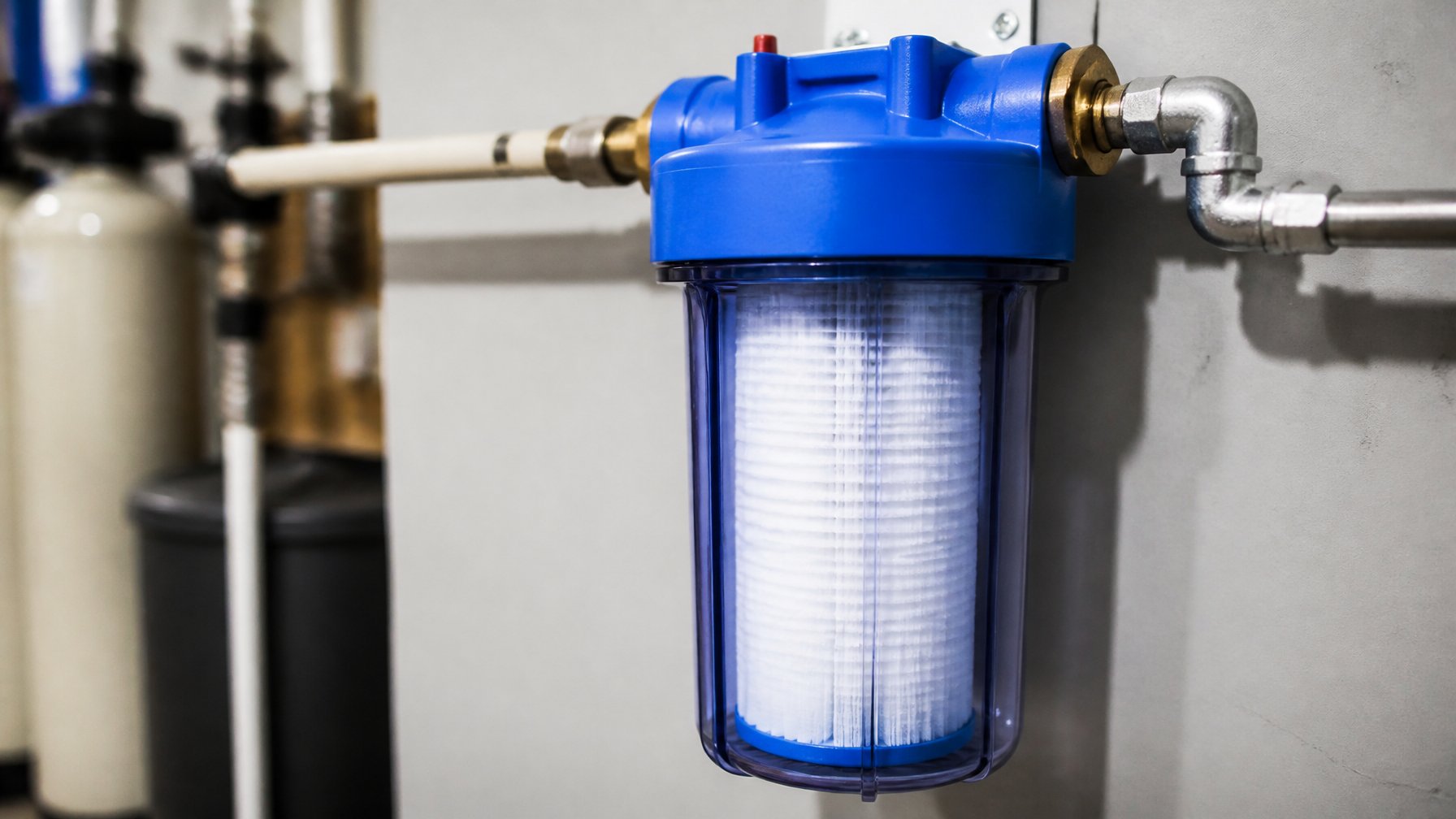
A 5-micron sediment pre-filter catches sand, rust, and dirt before water hits finer filters or equipment. Homeowners should compare housing size, flow rate, and pressure limits to match whole-home demand and avoid slowdowns.
Ask about cartridge type and life expectancy. Check how often cartridges need replacing, cost per cartridge, and whether the housing accepts standard or proprietary sizes.
Weigh upfront cost vs. maintenance. Larger housings last longer between changes but cost more and take more space. They also make downstream filters and water-using appliances last longer.
See the homepage for more whole-home filter options and installation advice.
7) Kinetic degradation fluxion (KDF) filter stage for chlorine and heavy metals (e.g., KDF-GAC Combo)
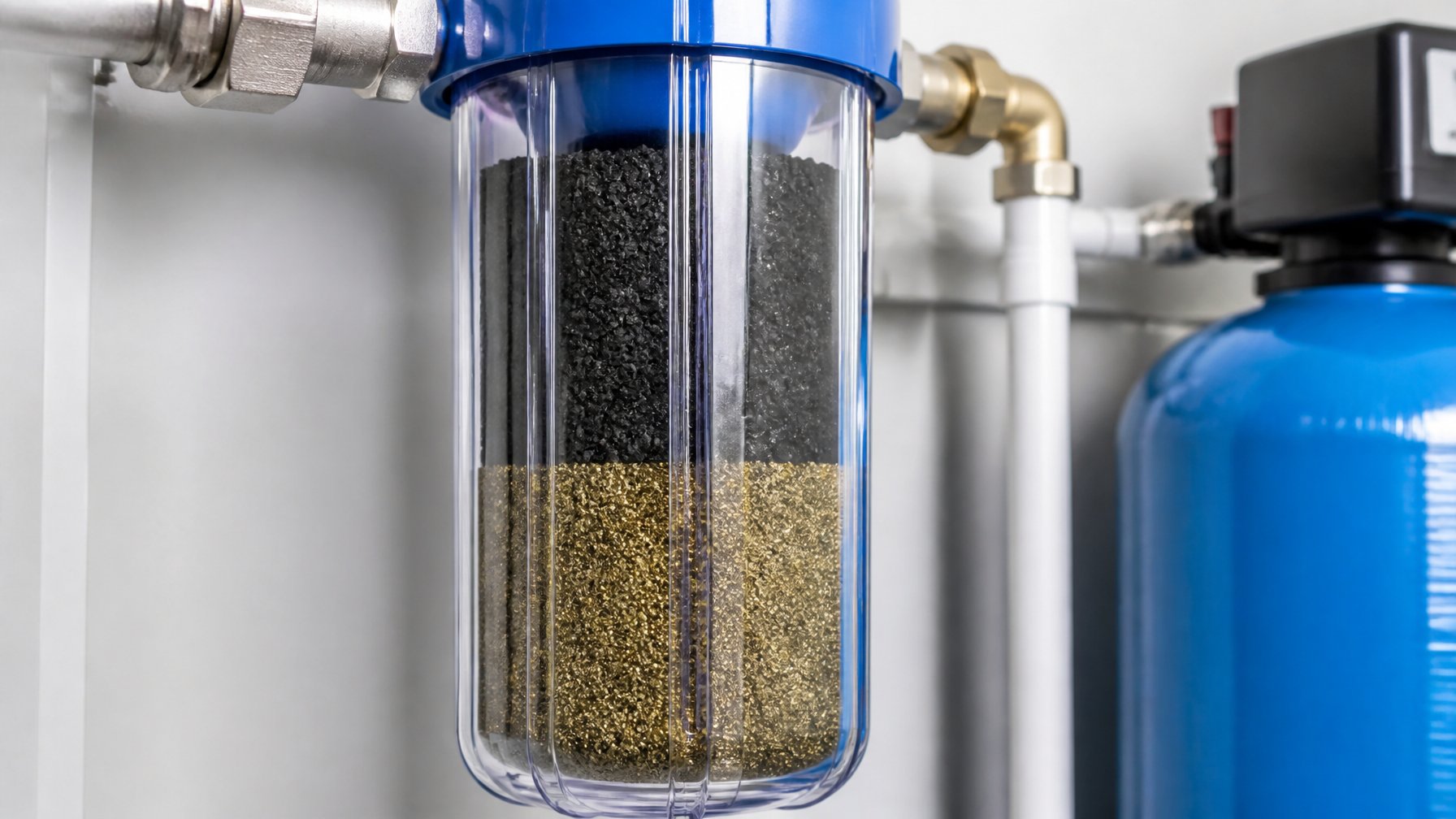
KDF media uses copper and zinc to reduce chlorine and some heavy metals. Homeowners should compare KDF grade, contact time, and whether it pairs with GAC for better taste and VOC removal.
Ask about flow rate limits and pressure drop when adding KDF to a whole-home system. KDF can extend GAC life but may raise upfront cost and need space in the filter housing.
Check compatibility with water softeners and resin-based systems, since KDF can affect ion exchange performance. They should view product specs and ask a pro or consult the company page for system sizing.
Consider longevity and replacement cost: KDF often lasts longer than GAC alone, but combined media still needs periodic change. Balance media life against maintenance access and total system footprint.
8) Point-of-entry iron filter (e.g., Iron Pro 2 Combination Unit)
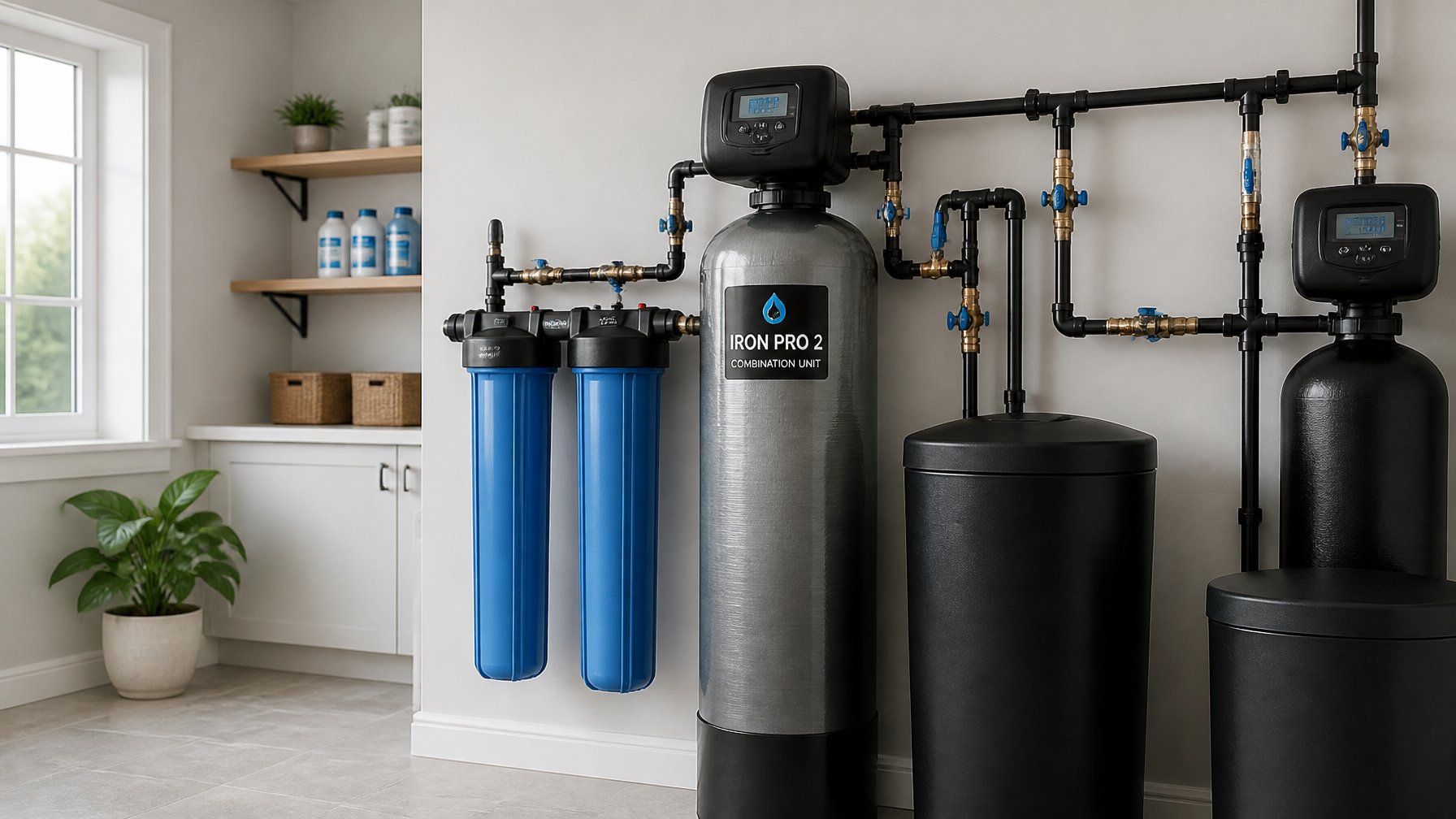
A point-of-entry iron filter treats all water entering the house to remove iron, manganese, and hydrogen sulfide. Homeowners should compare capacity (grain or ppm ratings), backwash frequency, and how often the media needs replacement.
Ask about required pre-treatment like a sediment filter or water softener to protect the unit. Check flow rate to match peak household demand and confirm electrical or drain needs for regeneration cycles.
Consider tradeoffs: combo units save space but cost more upfront and need regular maintenance. For installation tips and related services, visit the homepage for more guidance.