
You face hard water choices that affect pipes, appliances, and soap use in your Las Vegas home. This article helps you weigh space, salt vs. salt-free tradeoffs, system size, and costs so you can pick a practical solution that fits your household and budget.
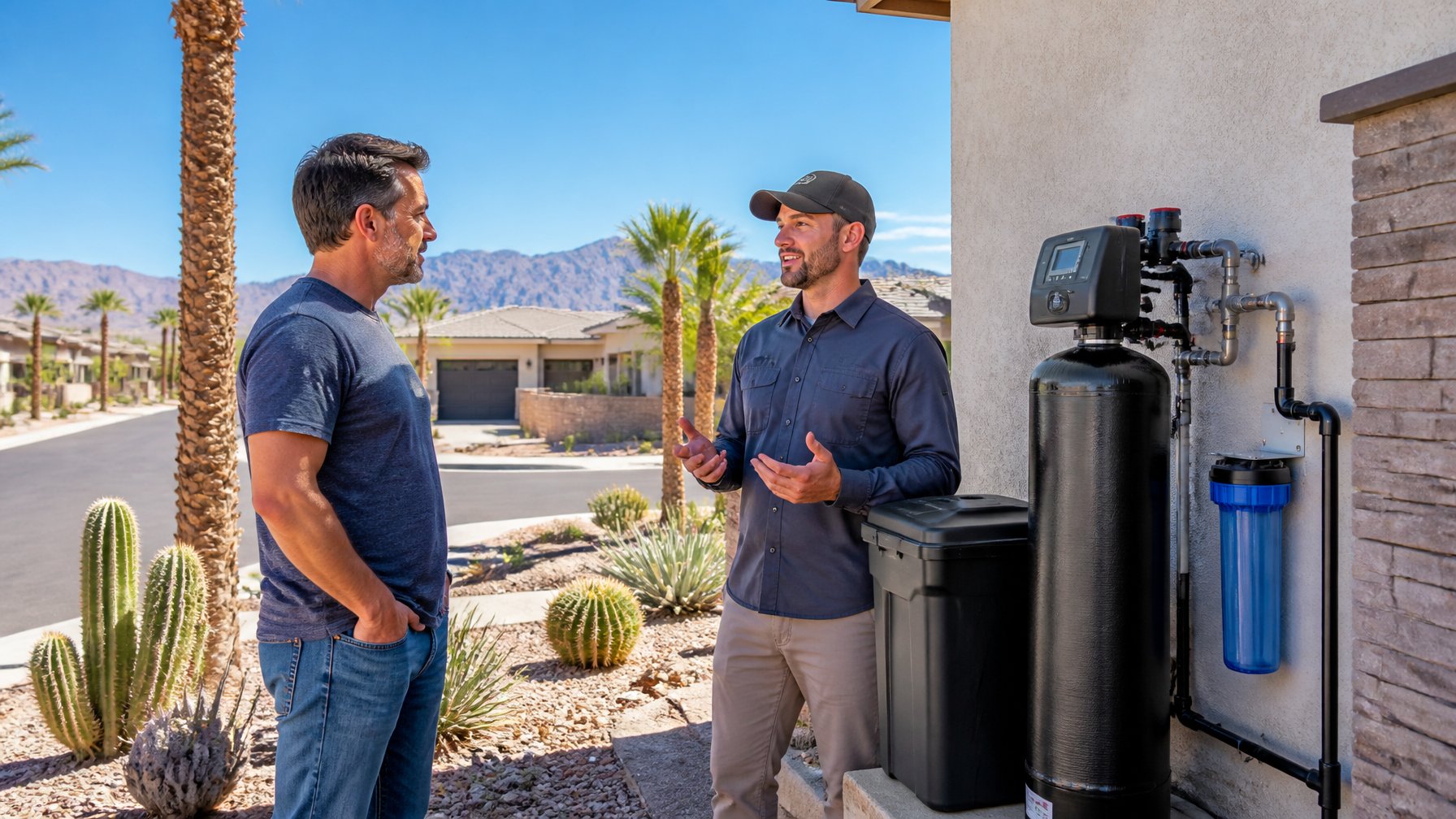
You will learn which questions to ask and which measurements to make before buying or installing a water softener. The guide covers water hardness testing, usage patterns, plumbing needs, regeneration costs, drainage rules, and how to handle iron or chloramines with whole-home filtration to avoid surprises.
1) Assessing Las Vegas water hardness (mg/L or grains per gallon)

They should test water hardness using a kit or request a recent report from the water provider. Compare results in mg/L or grains per gallon (gpg); 1 gpg ≈ 17.1 mg/L. Knowing the number guides how big a softener they need.
Ask whether hardness varies across the house or over time. Hardness can differ between well water and municipal supply. If it changes, plan for a system with adjustable regeneration or a higher capacity.
Consider typical Las Vegas ranges when choosing salt-based or salt-free options. Higher hardness favors salt-based units for reliable softening; lower hardness may allow salt-free conditioners. Learn more on the homepage.
2) Measuring household water usage patterns (peak daily gallons)
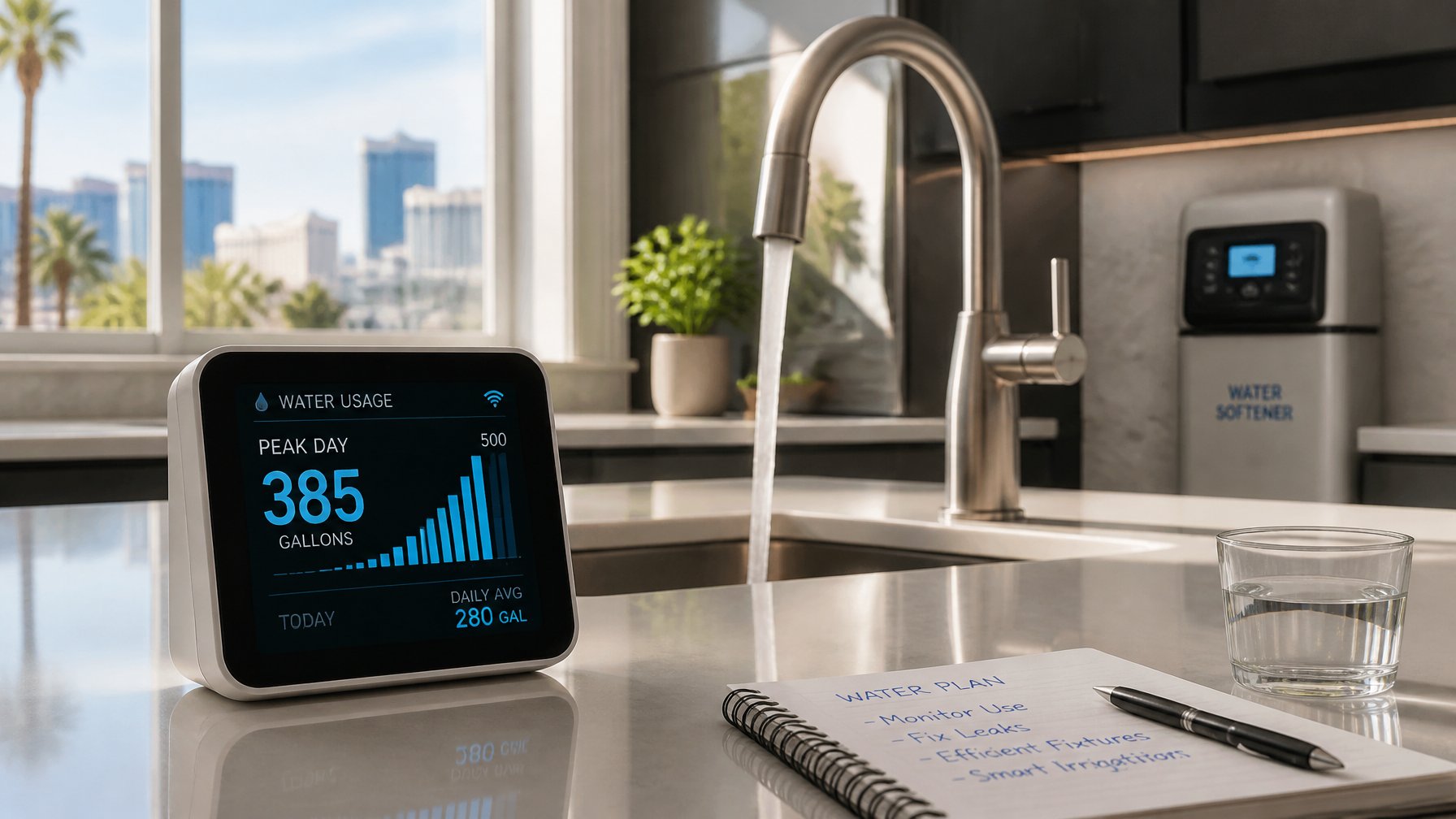
They should track how much water the household uses on a busy day. List showers, dishwashing, laundry loads, and irrigation. Add up gallons per use or check the water bill for daily averages and multiply by high-use days.
They should note peak hour demand, not just daily totals. A family with morning showers and evening irrigation may need higher flow capacity. Compare peak gallons per minute (GPM) to softener flow ratings when choosing a system.
They should ask about appliances that use lots of water, like large tubs or multiple washers. Trade off between a larger softener that handles peaks and a smaller model that saves space and salt. Check sizing guides on the water softener service page to match peak daily gallons.
3) Evaluating available space for a water softener and bypass valve
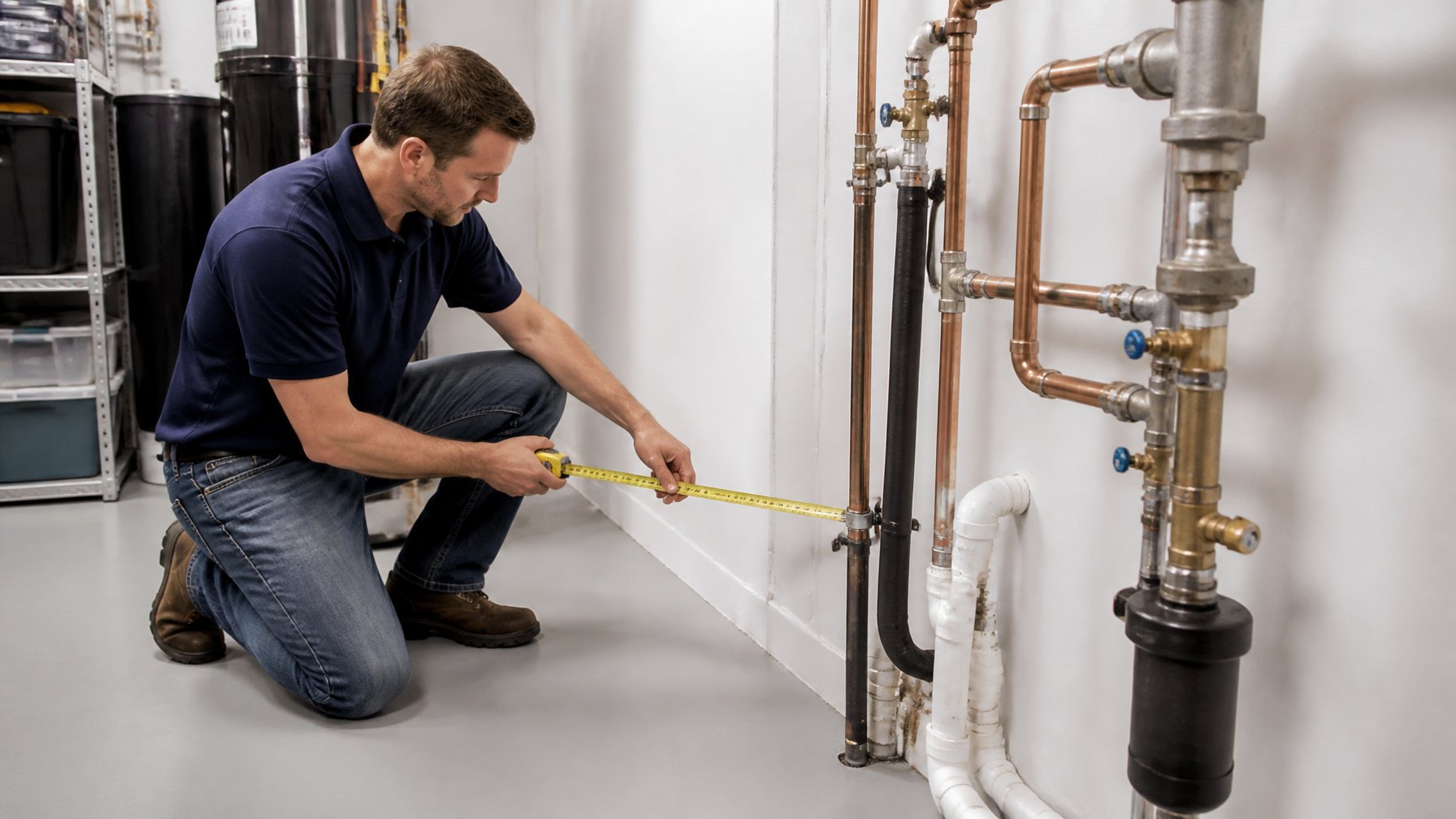
They should measure the installation area before choosing a unit. Compare tank height, diameter, and the footprint against the space under sinks, in garages, or utility rooms. Ask if there is at least 12 inches of clearance around the softener for service and venting.
They must locate the main water line and allow room for a bypass valve beside the softener. Ask what type of bypass fits the chosen unit—manual or integrated—and compare ease of use and leak risk. Consider pipe alignment and whether extra fittings or a small relocation will be needed.
They should check floor strength and drainage access. Softener drains need a nearby drain or drain pump; trade off between installing a pump versus running a longer drain line. Visit the homepage for more service details and to see typical layout examples.
4) Checking existing plumbing material and required connection points
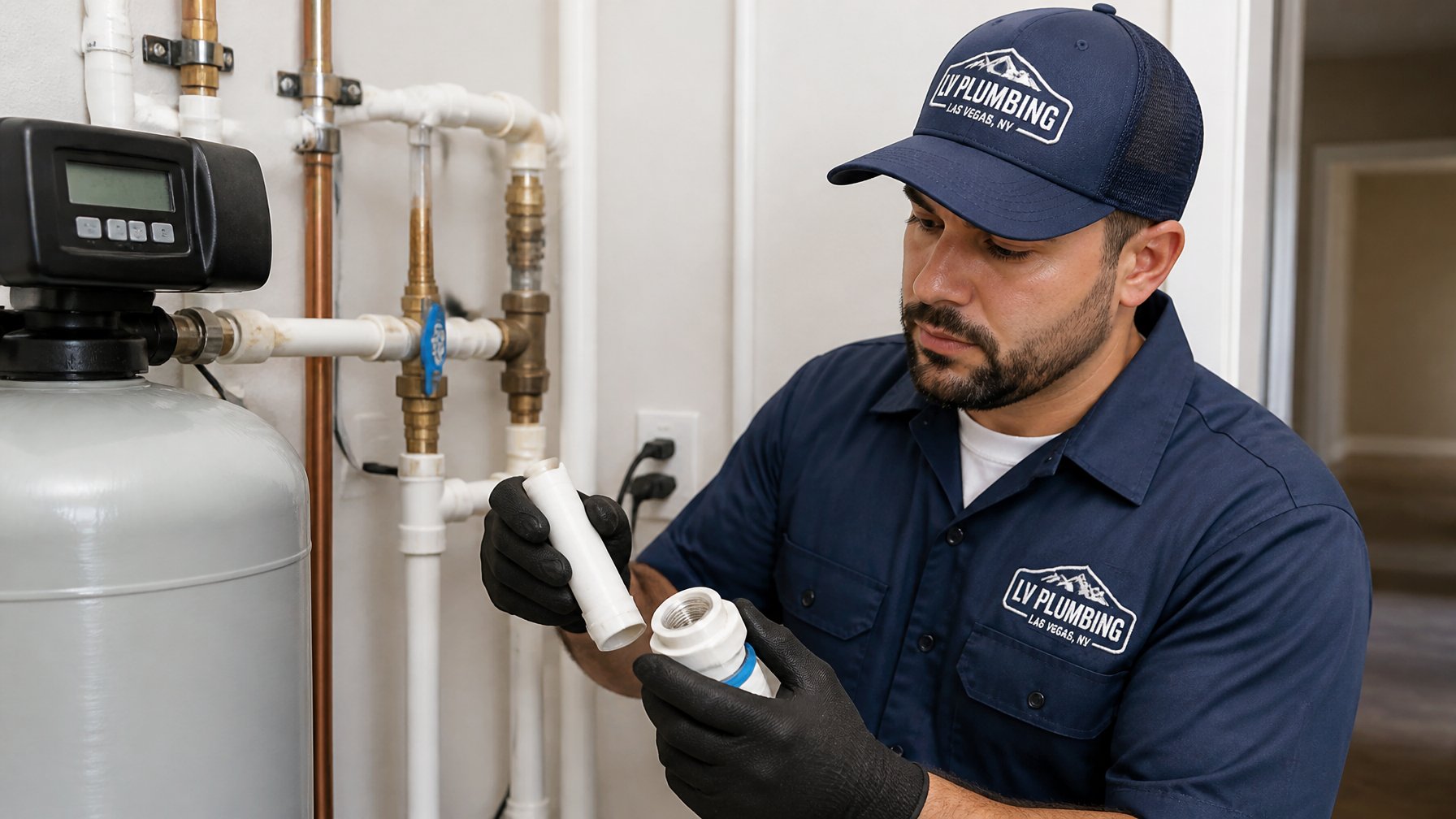
They should identify the pipe material entering the house—copper, PEX, PVC, or galvanized steel—and compare fittings needed for each. Ask whether adapters or a bypass valve are required and what size the main water line is. This matters because connection types and line diameter affect flow and install cost.
They should check where the water meter, pressure regulator, and main shutoff sit. Note clearance space for the softener and softener drain routing. Ask if a dedicated electrical outlet is nearby or if an electrician will be needed.
They should consider tradeoffs between installing the unit at the entry point versus a garage or utility room. Entry installs treat all water but may be harder to fit. Garage installs are easier to access but might leave outdoor lines untreated.
For more on choosing the right setup and service options, see water softener services.
5) Determining whether a salt-based or salt-free system fits your needs

They should compare how each system treats hard minerals. Salt-based systems remove hardness by ion exchange and prevent scale well. Salt-free systems condition water to reduce scale but do not remove hardness ions.
Ask about maintenance and operating costs. Salt-based units need salt refills and occasional resin replacement. Salt-free units have lower routine costs but may need cartridge swaps and work best for moderate hardness.
Consider plumbing, water use, and health concerns. Salt-based systems add sodium to softened water, which matters for people on low-sodium diets. Salt-free systems keep mineral content but may not protect appliances as fully.
Check compatibility with other home systems and local regulations. They should confirm softener choice with a plumber and view service options on the homepage.
6) Calculating regeneration frequency vs. local water rates and salt costs

They should calculate how often the softener will regenerate based on household water use, hardness level, and the unit’s grain capacity. Compare the salt dose per regeneration and the salt price to find a monthly salt cost. Ask the installer for the system’s grains per pound of salt and typical regeneration volume for accurate math.
They should check local water rates to estimate the cost of water used during each regeneration. Multiply gallons per regen by the number of regenerations per month, then apply the local price per gallon. This reveals the hidden water cost that often equals or exceeds salt expenses.
They should weigh higher-capacity systems that regenerate less often against lower-capacity ones that save upfront cost but need more frequent regeneration. Consider current salt prices and water rates in Las Vegas, and ask about adjustable regen settings to balance salt use, water waste, and resin life. Visit the homepage for more service details.
7) Confirming drainage options and local discharge regulations in Clark County
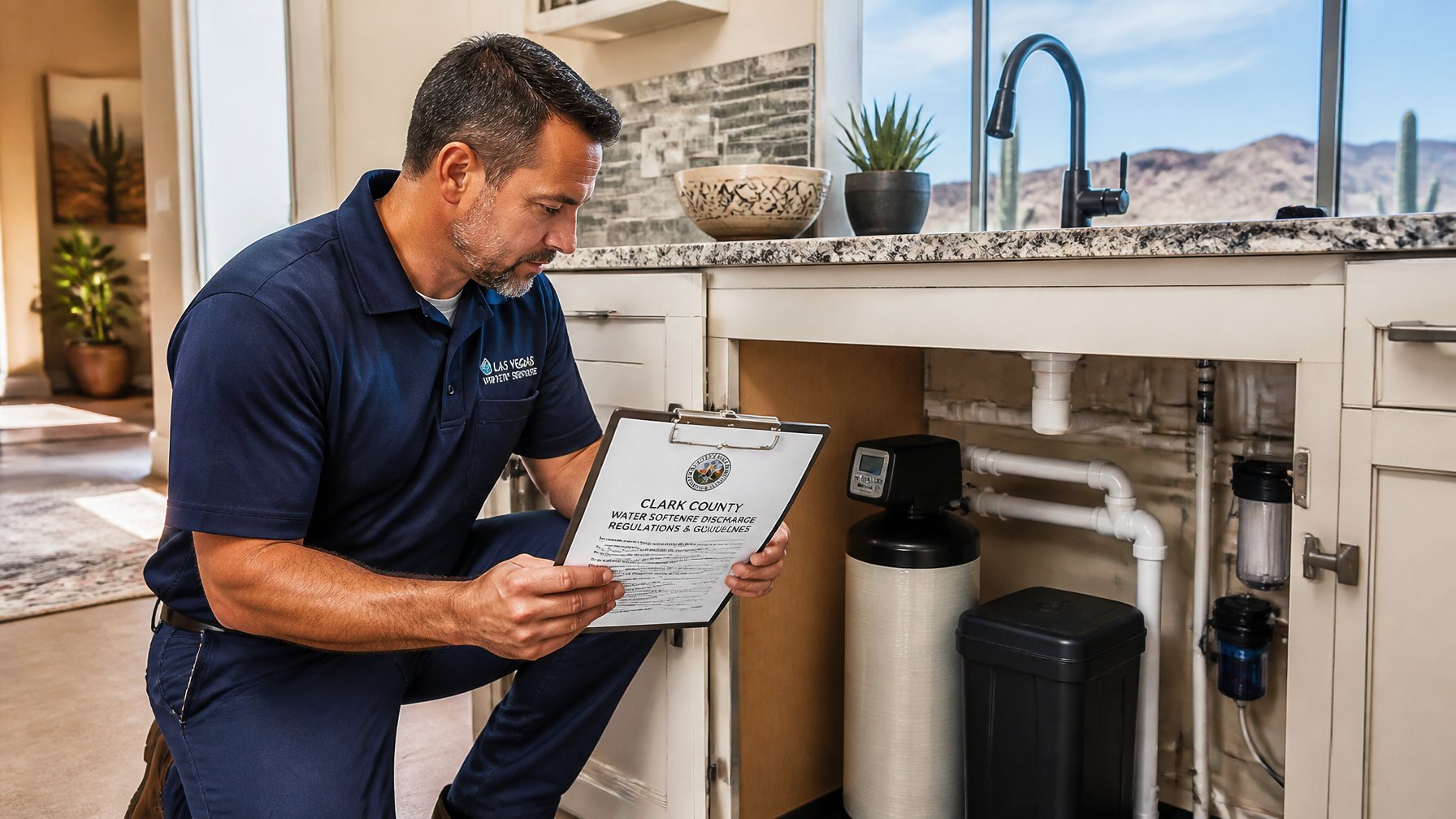
They should check where the softener will drain. Compare options: connect to a laundry drain, a utility sink, or a dedicated sewer line. Ask if the chosen drain can handle backflow and repeated salt brine discharge.
They must ask the installer about Clark County and City of Las Vegas rules. Find out if brine discharge to the sewer, storm drain, or septic is allowed. Some systems need a drain neutralizer or a permit.
Homeowners should weigh installation cost versus ongoing compliance. A longer drain line to sewer cost more but may meet rules; a simple laundry hookup is cheaper but might be restricted. See the homepage for more info.
8) Considering water softener capacity matched to family size (e.g., 48,000-grain)

They should compare grain capacity to household size and water use. A 48,000-grain softener often suits a family of four with moderate hardness, but actual needs depend on daily gallons used and hardness ppm. Ask the installer to calculate grains removed per month and show the math.
They should ask what regeneration frequency looks like. Less frequent regen saves salt and water but needs higher capacity. Trade off higher upfront cost for fewer regenerations and lower running cost.
They should check salt and water use estimates for each model. Compare manufacturers’ specs and request a real-world estimate for the home. For more detail on services and sizing, see the homepage.
9) Integrating with whole-home filtration for iron and chloramines removal
They should compare filter types and ordering. Ask whether a backwashing iron filter, KDF, or catalytic carbon best fits the iron and chloramine levels from a lab test. Consider adding a pre-filter before the softener to protect resin and a post-filter if chloramines persist.
They should check flow rate and pressure drop. Match the filtration system’s flow capacity to the home’s peak demand so showers and appliances run normally. Tradeoffs include higher upfront cost for systems that handle both iron and chloramines versus separate units that are cheaper but take more space.
They should ask about maintenance and media life. Find out service intervals, media replacement cost, and whether the system regenerates automatically. For more local options and guidance, visit the homepage.